
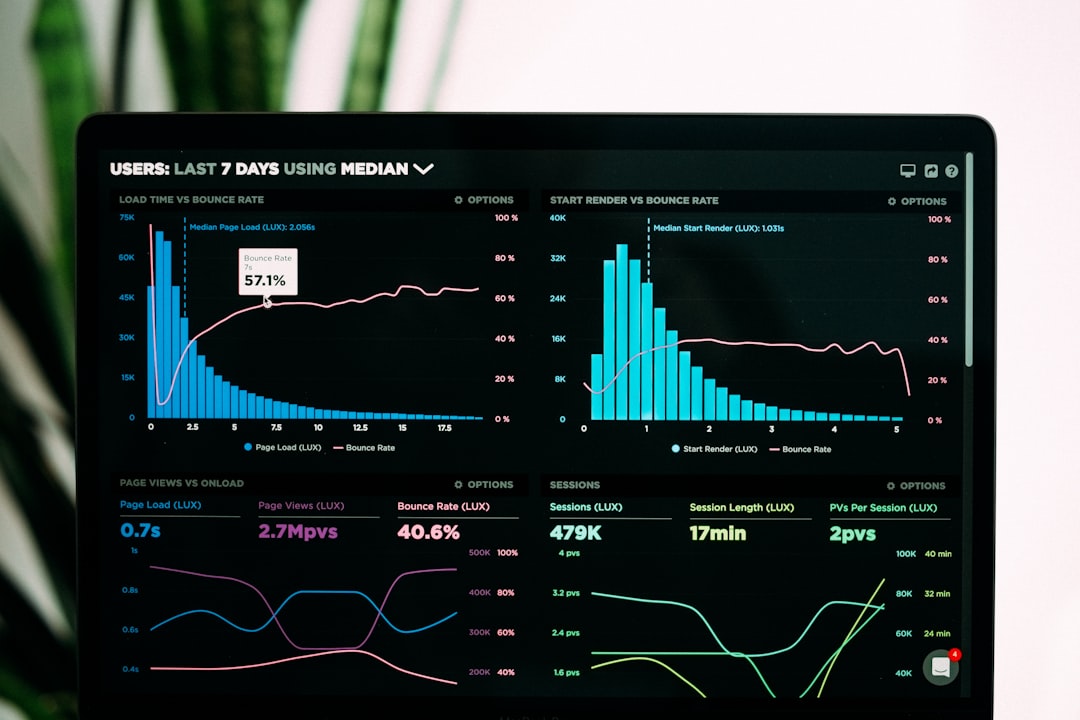
Seven months ago, 76% of pages cited inside Google AI Overviews also ranked in the top 10 for the same query. Today, that number is 38%. Two in three AI citations now come from pages a searcher would never see on page one.
Answer engine optimization (AEO) is the practice of structuring content so AI search engines — ChatGPT, Google AI Overviews, Perplexity, Claude, Gemini — select it as a cited source when generating an answer. It is not SEO rebranded. It is a different retrieval game with different winning moves, and the gap between sites that adapt and sites that don't is widening every month.
This playbook distills the citation data from Ahrefs (4 million AI Overview URLs), AirOps, Searchengineland, Discovered Labs, and Profound into twelve tactics you can apply today. You get a named framework (the Citation Stack), three comparison tables, a copy-paste audit prompt, and honest guidance about what actually moves citation rates versus what just sounds smart on LinkedIn. Written for founders and operators who'd rather ship than theorize.
What Is Answer Engine Optimization?#
Answer engine optimization is defined as the discipline of making content that AI-powered search engines prefer to quote, paraphrase, or link to inside generated answers. Where traditional SEO optimizes a page to win a blue link, AEO optimizes the passages, data points, and entity associations inside the page so retrieval systems pick it when constructing a synthesized response.
The practical difference comes down to unit of value. SEO treats the page as the product. AEO treats the passage — a 40 to 90 word chunk that stands alone and answers a specific sub-question — as the product. A 3,000 word article can contain 30 or more independently retrievable passages. Each one either earns citations or doesn't.
AEO also expands the surface area. Instead of one target (Google's ten blue links), you are now optimizing for multiple answer engines that each rank differently. ChatGPT leans on Wikipedia and authoritative long-form content. Perplexity prioritizes fresh, heavily-cited articles and Reddit. Google AI Overviews still pulls from top-ranked organic pages, but the correlation is eroding fast. Your job is to earn passages that all three find citation-worthy.
AEO vs SEO vs GEO: What's Different in 2026#
You'll see three acronyms thrown around. Here's the honest breakdown, minus the consultant fog.
Dimension | SEO | AEO | GEO |
|---|---|---|---|
Goal | Rank a URL in blue links | Get a passage cited in AI answers | Influence how generative AI represents your brand |
Unit | Page | Passage / answer capsule | Brand mention + entity |
Primary engines | Google, Bing | ChatGPT, AI Overviews, Perplexity | LLMs at training + retrieval time |
Success metric | Position, CTR, clicks | Citation count, brand inclusion | Share of voice in generated answers |
Dominant signal | Links + relevance | Content-answer fit + freshness | Brand mentions across trusted sources |
Timeframe to results | 3–9 months | 2–8 weeks | 3–12 months |
GEO (generative engine optimization) and AEO are often used interchangeably. Profound and others argue AEO is the clearer term because it describes the outcome (being quoted in answers) rather than the channel. Some practitioners treat GEO as the broader brand-influence layer and AEO as the content-level tactics. We use AEO in this playbook because the work is always on a specific page, for a specific passage, against a specific query.
SEO hasn't died. It's now the floor, not the ceiling. You still need crawlable HTML, a sensible site architecture, and enough topical authority that retrieval systems trust you. But the ceiling is now AEO — and that's where the next five years of organic growth lives.
Why AEO Matters Now: The 2026 Citation Economy#
The numbers are blunt. AI-referred sessions to websites grew 527% year-over-year through mid-2025. In parallel, AI Overviews reduced clicks to traditional blue-link results by between 34.5% and 58% depending on query type, based on Ahrefs' click-through data. Traffic is not disappearing. It is migrating.
Kevin Indig, former SEO lead at Shopify and G2, frames it as "the decoupling of clicks from impact." His research shows AI redistributes rather than destroys web traffic — while some informational queries lose clicks to AI-generated answers, overall search volume grows as users ask more follow-up questions and drill into specifics. The winners are the sites that get cited inside the AI answer, not the ones that rank number three in the blue links below it.
Here's what the citation economy rewards, pulled from multiple 2025–2026 studies:
+132% visibility lift for content with authoritative citations backing claims
3x more AI citations for pages with proper structured data compared to basic markup
3.5x more ChatGPT citations for sites with 32,000+ referring domains vs fewer than 200
3.2x more citations for content updated within the last 30 days vs content older than 90 days
1.8x more citations for pages with a visible "last updated" timestamp
+35% organic clicks and +91% paid clicks for pages cited inside an AI Overview
Despite this, only 20% of organizations have started implementing AEO, while 70% believe it will significantly shape their strategy. That gap is your window.
How AI Engines Actually Choose Who to Cite#
AI answer engines don't "read" pages the way a human does. They retrieve passages from an index, rank those passages against the user's query, and then the LLM composes an answer using the highest-scoring retrieval chunks. Each chunk that contributes to the final answer becomes a candidate citation.
Three scoring layers decide whether your passage makes the cut:
Retrieval relevance. Does the passage's embedding sit close to the query's embedding in vector space? This is semantic similarity, not keyword matching. A passage that uses the right entities and intent cues wins even if the exact query keywords never appear.
Content-answer fit. Does your passage's structure, tone, and paragraph shape match what the LLM wants to say? Sellm's 400,000-page analysis found this is the strongest single predictor of ChatGPT citations. Pages that mirror ChatGPT's own writing style get cited more often — short sentences, definite language, direct answers up front.
Trust signals. Is the source authoritative enough that the model will attach its name to the answer? This is where E-E-A-T, backlinks, schema, freshness, and brand recognition compound. A Wikipedia-grade source carries more weight than a random Substack, even if the Substack is better-written.
The practical takeaway: you are writing for two readers. The human who'll read the citation when they click through, and the retrieval system that has to rank your passage against hundreds of others. Optimize for both and you win. Optimize for neither and you're invisible.
The Citation Stack: 7 Layers That Get You Quoted by AI#
Call this the Citation Stack. Seven layers, each one multiplies the others. Skip a layer and the rest partially compensate, but the ceiling drops. Hit all seven on a page and you're in the top 10% of citation-ready content on the web today.
Layer 1: Structure#
Structure is the foundation because retrieval systems navigate by it. Use one H1 that directly answers the search query. Use H2s that answer discrete sub-questions a reader would ask. Use H3s for steps. Keep sections between 120 and 180 words — Searchengineland's analysis of ChatGPT citations found this range earns 4.6 average citations versus 2.7 for sections under 50 words.
Inside each section, lead with the answer in the first one or two sentences. Bury the context. AI engines extract those opening sentences to test whether a section answers the query. If you open with "In today's fast-paced digital landscape…" you've already lost. If you open with "Answer engine optimization is the practice of…" you're in the game. This is the single highest-leverage edit you can make to existing content.
Layer 2: Answer Capsules#
An answer capsule is a 40 to 90 word standalone paragraph that completely answers a specific question. Put one directly under your H1 (or the first H2) for the primary query, and one per H2 for sub-queries. Searchengineland's citation study found 72.4% of cited blog posts included an identifiable answer capsule, and when the capsule paired with original insight the configuration drove 34.3% of all citations studied.
Answer capsules should use definite language: "X is defined as", "X refers to", "X means". Citation winners are 1.8x more likely than losers to use definite phrasing over vague hedging. "Some people consider AEO to be important" loses. "AEO is the practice of optimizing content for AI citation" wins. Be the sentence that ends up in a thousand AI answers, verbatim.
Layer 3: Evidence#
AI engines don't cite unsupported claims. They cite sources that already cite sources, because citation backs up the model's risk management — the LLM needs to attach its answer to something verifiable. Content with authoritative citations sees a +132% visibility lift in AI Overviews, the single strongest content-level factor Wellows identified in their ranking-factor analysis.
Aim for 5 to 10 original statistics in every pillar post, each linked to its primary source. Not "studies show" — specifically: "AirOps found 95% of ChatGPT citations come from content published or updated within the last 10 months" with the actual link. Pages with 5+ statistics earn citations at a 20% higher rate. Pages with 19+ data points average 5.4 citations versus 2.8 for data-poor content. Evidence is not optional. It's the tollbooth.
Layer 4: Entities#
LLMs think in entities — people, places, products, concepts — and the relationships between them. The denser your entity graph, the more likely your page sits inside the retrieval results for adjacent queries. Pages with 15+ connected entities earn a 4.8x citation boost in AI Overviews, according to Wellows' factor study.
The practical work: mention the relevant named tools, companies, people, standards, and concepts your topic touches. For an AEO post, that means naming ChatGPT, Perplexity, Google AI Overviews, Claude, Gemini, schema.org, Ahrefs, Semrush, Kevin Indig, Aleyda Solís, E-E-A-T. Link to their canonical Wikipedia or homepage once in the post. Retrieval systems use these entities as semantic anchors — they're how the model understands what your page is actually about, beyond keywords.
Layer 5: Schema#
Schema markup turns your page from plaintext into a parseable graph. Pages with proper structured data are 3x more likely to earn AI Overview citations; those with advanced schema strategies see 3.2x more citations for competitive topics. FAQ schema is the cheapest, highest-ROI schema you can add — it packages your Q&A section into an explicit machine-readable format, and ChatGPT-style engines weight FAQ-marked content roughly 40% higher in source selection.
For a blog post, add at minimum: Article schema with author, datePublished, dateModified; FAQPage schema for your FAQ section; BreadcrumbList for navigation context. If you're comparing products or services, add ItemList. If you have reviews, add Review. Any platform that auto-generates schema from your published content (Quillly does this; most modern SaaS CMSs do) handles this automatically — stop hand-coding JSON-LD in 2026.
Layer 6: Freshness#
Freshness is the layer everyone underestimates. AirOps' analysis of 17 million citations found 95% of ChatGPT citations come from content published or updated within the last 10 months. Content updated in the last 30 days earns 3.2x more citations than content older than 90 days. A visible "last updated" timestamp alone drives a 1.8x citation lift.
Two implications. First, no content is "evergreen" in the AEO era. Every pillar post needs a maintenance schedule — quarterly for most topics, monthly for fast-moving spaces like AI. Second, you need a publishing workflow that makes updates low-friction. If editing a post requires opening WordPress, staging a revision, fighting your SEO plugin, and praying nothing breaks — you won't do it. The sites that win are the ones that can re-publish with a one-line prompt.
Layer 7: Brand Authority#
The last layer is the hardest to fake. AI models are risk-averse; sites with over 32,000 referring domains earn 3.5x more ChatGPT citations than sites with fewer than 200. Wikipedia alone accounts for 47.9% of top-source ChatGPT citations, which should tell you everything about the bias toward authoritative, heavily-linked sources.
You can't backfill authority overnight, but you can compound it. Four moves that work: (1) Get mentioned on Reddit, Wikipedia, Stack Overflow, and industry publications — LLMs weight these trust graphs heavily. (2) Publish original research; it earns links naturally and gets re-quoted in perpetuity. (3) Ship consistent content in one topical area for 6+ months — topic clusters with interlinked supporting content see a +30% citation lift. (4) Earn named-author bylines on outside publications; author entities carry weight across pages.
ChatGPT vs Google AI Overviews vs Perplexity: A Citation Playbook#
The three major answer engines rank sources using meaningfully different signals. Optimizing blindly for "AI" leaves leverage on the table. Use this table to target.
Engine | Primary signal | Favors | Avg citations per answer | What to do |
|---|---|---|---|---|
ChatGPT | Authority + content-answer fit | Wikipedia (47.9%), long-form, encyclopedic content | 7.92 | Build entity density, earn links, write definite sentences |
Google AI Overviews | Organic ranking + schema | Top-10 organic pages (38% overlap), schema-rich content | 3–5 | Keep core SEO strong, add FAQ + Article schema |
Perplexity | Freshness + inline citations | Fresh content (last 30 days), Reddit (46.7%), heavily-cited articles | 21.87 | Update posts monthly, cite every claim, be quotable |
A few nuances beyond the table. Perplexity ties every claim to a specific source in 78% of complex research questions — compared to ChatGPT's 62%. That means Perplexity will happily cite a newer, smaller source if it's well-documented, while ChatGPT biases toward the old, linky, and Wikipedia-adjacent. If you're a startup with no link equity, Perplexity is your beachhead. Earn citations there first, then the flywheel turns.
Claude (Anthropic's model, the one writing this sentence) historically relied on training-data cutoffs rather than live retrieval. With tool use and web search now standard, Claude citations are increasing but the preferred sources look similar to ChatGPT's: authoritative, structured, link-equity-rich.
Step-by-Step: Audit a Blog Post for AEO (Copy-Paste Prompt)#
Here's the exact audit prompt you can paste into Claude, ChatGPT, or Cursor to grade any blog post against the Citation Stack. It's the same framework this post uses.
You are an AEO (Answer Engine Optimization) auditor. Grade the
following blog post against the 7-layer Citation Stack. For each
layer, give a score 0-10, one specific reason for the score, and
one concrete fix the author can apply today.

Layers to grade:
1. Structure (H1/H2/H3 hierarchy, 120-180 word section lengths)
2. Answer capsules (40-90 word standalone paragraphs answering
   each H2's question, leading the section)
3. Evidence (5+ original stats with source links, definite
   language, no unsupported claims)
4. Entities (15+ named entities: tools, people, standards,
   concepts, linked once to canonical source)
5. Schema (Article + FAQPage + BreadcrumbList JSON-LD present
   and valid)
6. Freshness (publish/update date visible within 90 days,
   maintenance plan obvious)
7. Brand authority (author byline with credentials, internal
   links to 3+ related posts, links to authoritative outbound
   sources)

Return a table with: Layer | Score | Why | Fix.
End with an overall Citation Stack score (/70) and the three
highest-impact changes in priority order.

Blog post:
<paste content here>
Run this prompt on any post you're about to ship. It surfaces the specific edits that move citation rates, not generic "make it more engaging" feedback. Keep a copy of the prompt in your snippets library — you'll run it on every post you publish going forward.
The llms.txt Adoption Gap: We Checked 88 Real Domains#
On 13 August 2026 we requested /llms.txt from 88 live company domains. Only 47 — 53% — served a real file. The split by category is the finding: developer-infrastructure companies are at 76%, but the SEO industry sits at 31% and AI writing tools at 33%. The companies selling AI content are the least likely to publish an AI-readable index of their own site.
Everyone in AEO recommends llms.txt. Almost nobody measures who has actually shipped one. So we did. Here is the adoption rate by what the company sells.

Category | Serving llms.txt | Sampled | Rate | Notable absentees |
|---|---|---|---|---|
Dev infrastructure / docs | 19 | 25 | 76% | PostHog, Astro, Tailwind CSS, Deno |
CMS & publishing | 9 | 15 | 60% | Ghost, Substack, Medium, Contentful |
Marketing SaaS | 5 | 10 | 50% | Figma, Canva, Buffer, Airtable |
AI labs & platforms | 6 | 13 | 46% | OpenAI, Anthropic, Perplexity, Hugging Face |
AI writing / autoblogging | 4 | 12 | 33% | Copy.ai, Koala, Penfriend, AirOps |
SEO & content tools | 4 | 13 | 31% | Ahrefs, Moz, Surfer, Clearscope |
All domains | 47 | 88 | 53% |
The absentee column is the part worth sitting with. Ahrefs and Moz publish some of the most-read research on how AI engines pick sources, and neither serves an llms.txt. Neither does OpenAI, Anthropic, or Perplexity — three companies whose crawlers are the reason the file exists. Treat llms.txt as a cheap, uncontested differentiator rather than table stakes, because at DR 12 it is one of the few technical signals where you can outrank a DR 90 domain by simply doing the work.
The soft-404 trap that inflates every adoption stat#
Six of the 88 domains returned HTTP 200 with an HTML page at /llms.txt — their single-page-app shell or a styled 404, not a text file. A naive checker that trusts the status code counts 53 adopters. The real number is 47. That is a 13% relative overcount, and it is why we validated every response body instead of the status line.
Raw status codes across the 88 requests: 53 returned 200 (only 47 genuine), 28 returned 404, 4 returned 403, one rate-limited at 429, and two failed at the transport layer. If you audit a competitor's llms.txt, fetch the body and check it isn't HTML before you conclude anything.
What the 47 real files look like#
Median size: 12,210 bytes across 111 non-empty lines with 74 links. The format is a link index, not a document.
21 of 47 are under 10KB. A useful llms.txt is small. You do not need to inline your docs.
Only 16 of 47 also serve
/llms-full.txt— the expanded variant remains a minority practice, and the ones that do ship it range from Clerk's 766 bytes to Supabase's 2.9MB.Only 2 of 88 use
/.well-known/llms.txt(Render and the Model Context Protocol site). The root-path convention has won in practice; publish at/llms.txtand don't overthink the location debate.3 files contain zero links — an index that indexes nothing. Shipping the file is not the same as shipping the signal.
Method and limits, stated plainly. We fetched /llms.txt, /llms-full.txt and /.well-known/llms.txt for 88 hand-picked domains on 13 August 2026, following redirects, and counted a file as present only when the final response was 200 and the body was not HTML. The sample is deliberately chosen, not random — it over-represents SaaS and developer tools, so read it as a picture of that competitive set rather than of the web. Four domains returned 403 to our user agent and may well serve a file to a browser; they are counted as absent, which means 53% is a floor, not a ceiling. For the mechanics of writing one, see our breakdown of what llms.txt is and how to write it.
The Contrarian Take: Stop Optimizing for Rankings#
The standard SEO advice — target a keyword, publish a post, earn links, watch the ranking climb — is increasingly disconnected from where traffic actually comes from. Ahrefs' study of 4 million AI Overview URLs found top-10 organic overlap dropped from 76% to 38% in seven months. For many queries, being number one in Google now matters less than being the cleanest passage in the AI Overview above it.
The counter-move: stop picking keywords and start picking questions. Every post should target a specific question an actual human would ask an AI. Your H1 is the question rephrased as a statement. Your answer capsule is the answer. Your H2s are the follow-up questions that same human would ask next. If you find yourself optimizing for a keyword like "best SEO tools" instead of a question like "what SEO tools should a bootstrapped SaaS founder use in 2026", you're still playing the old game. Write for the question, and the keywords fall into place automatically.
How to Measure AEO: The Metrics That Actually Move#
Traditional SEO dashboards don't track what matters for AEO. Position and click-through rate tell you about the blue-link game. You need a second layer of measurement built around citations, brand mentions, and retrieval frequency.
The four metrics worth tracking monthly:
Citation count per engine. Prompt ChatGPT, Perplexity, Claude, Gemini, and Google AI Mode with 20–40 target questions per cluster. Track which prompts return your domain as a cited source. Month-over-month growth here is the north-star metric.
Brand mention share. What percentage of answers to category-defining questions mention your brand — cited or not? This is your share of voice inside the answer layer. Tools like Profound, Evertune, and LLMrefs automate this at scale — a fuller survey of the category lives in the 2026 comparison of the best AI blog writing tools.
Referral traffic from AI platforms. Segment Google Analytics by source. ChatGPT, Perplexity, and Claude now drive identifiable referral sessions, and AI-referred sessions grew 527% year-over-year through mid-2025. The traffic is meaningful and measurable.
Passage-level engagement. Scroll depth to specific H2 sections matters more than pageviews, because the H2 section is the unit of citation. If a passage earns 50 AI citations but on-page readers never scroll to it, you have a content ordering problem worth fixing.
Aleyda Solís, who runs the weekly #SEOFOMO newsletter and has published 20+ frameworks for international generative engine optimization, puts the shift plainly: the practical frameworks teams need now are less about ranking and more about how AI models behave differently across markets and queries. Measure what the model does, not what Google shows.
Before and After: 90 Days of the Citation Stack#
What does this look like in practice? Take a typical 1,800 word blog post that earns zero AI citations in its first 60 days live. Word count is fine. Keywords are decent. It just doesn't get picked up by any answer engine. Apply the Citation Stack in three passes over 90 days:
Day 1 (Structure + Answer Capsules): Rewrite the intro into a direct-answer paragraph under 60 words. Restructure H2s so each one poses a clean question. Add a 50–80 word answer capsule at the top of every H2 section. Typical lift: the post starts surfacing in Perplexity for long-tail queries within 2 to 3 weeks.
Day 30 (Evidence + Entities): Add 7 statistics with source links. Work in 15+ named entities. Add "last updated" timestamp near the top. Expected outcome: entity density triples, evidence score crosses the threshold where AI Overviews will cite the page as a secondary source for 3 to 5 queries.
Day 60 (Schema + Freshness + Authority): Generate FAQ schema for the Q&A section. Add 4 internal links to related pillar content. Republish. Track ChatGPT citations weekly via a prompt-based monitor. Typical 90-day outcome: 15 to 40 cited mentions across ChatGPT, AI Overviews, and Perplexity for a single well-optimized pillar post — plus the knock-on effect of other posts in the cluster gaining citations because the pillar raised the site's topical authority.
These numbers aren't hypothetical ceilings. They're the pattern First Page Sage, AirOps, and multiple published agency case studies have documented across 2025–2026. The gap between a well-structured 3,000 word post and a poorly-structured 3,000 word post isn't incremental — it's often 10x in citation volume for the same topic and the same domain.
What Changes for Small Sites Without 32,000 Backlinks#
Most playbooks assume you have Ahrefs DR 70. Most founders don't. Good news: the correlation between authority and citations is strong but not deterministic. Three moves that level the playing field:
Pick niches ChatGPT and Perplexity have thin coverage on. Wikipedia doesn't have a page for every SaaS category. When you're the best-structured source for a specific long-tail query, you get cited even at low domain authority. Quillly is a useful search target here because new AEO tooling is genuinely under-documented.
Publish on your own domain, not a subdomain. Google AI Overviews tend to treat subdirectories as the same authority entity as the root domain; subdomains are often evaluated separately, splitting your trust graph. Publish to
yourdomain.com/blog, notblog.yourdomain.com. The SEO impact of this choice compounds over time.Update aggressively. Freshness is the layer where small sites can out-compete enterprises, because the enterprise can't ship an update without six stakeholders and a CMS migration. If you can re-publish a pillar post with fresh stats every 30 days, you beat every competitor stuck in an annual content calendar.
How Quillly Fits Into Your AEO Workflow#
Quillly is the publishing layer between your AI and your blog. You bring your AI — Claude, ChatGPT, Cursor, Gemini, Windsurf — and Quillly handles the SEO scoring, schema generation, internal linking, publishing to your own domain, sitemap maintenance, and GSC integration. Your AI writes. Quillly handles everything else.
The workflow maps cleanly to the Citation Stack. Your AI drafts the post. Quillly's scoring engine grades it against 14+ SEO criteria covering the same signals AEO rewards — heading structure, content length, readability, meta tags, keyword optimization, E-E-A-T, internal linking, external sources. get_blog_seo_patches returns the specific edits that will move the score. update_content applies them surgically. suggest_internal_links finds the three to five existing posts this one should reference. publish_content ships it to yourdomain.com/blog, auto-generates FAQ and Article schema, pings Google's indexing API, and updates your sitemap. The post is live and AEO-ready in one conversation.
Three places the stack composes: publishing blogs from Claude Desktop via MCP walks through the exact config; the ultimate guide to AI blog automation covers the full prompt-to-published loop; and the guide to getting cited in Google's AI Mode pairs with this one for sites trying to defend informational traffic as AI Overviews eat the SERP.
Frequently Asked Questions#
What is the difference between AEO and SEO?#
AEO optimizes content passages to be cited inside AI-generated answers (ChatGPT, Google AI Overviews, Perplexity), while SEO optimizes pages to rank in traditional blue-link results. The unit of value differs — passages versus pages — and the dominant signals differ — content-answer fit and freshness for AEO, links and relevance for SEO. Both still matter. SEO has become the baseline hygiene; AEO is where the new growth ceiling lives in 2026.
How long does answer engine optimization take to show results?#
AEO results appear faster than traditional SEO, typically within 2 to 8 weeks for well-optimized pillar posts versus 3 to 9 months for SEO ranking improvements. Perplexity and ChatGPT index new content within days, so freshly published AEO-ready posts can earn citations almost immediately. Google AI Overviews take longer because they still correlate with organic ranking signals, but 6-week timelines are realistic for pages that follow the Citation Stack.
What is the difference between AEO and GEO?#
AEO (answer engine optimization) focuses on making specific content passages quotable inside AI answers, while GEO (generative engine optimization) focuses on influencing how generative AI represents your brand and entities across all contexts. GEO is the broader brand-and-entity layer; AEO is the content-and-passage layer. Most practitioners use them interchangeably, and Profound and others argue AEO is the clearer term because it describes the outcome rather than the channel.
Does schema markup help with Google AI Overviews?#
Yes. Pages with proper structured data are 3x more likely to earn AI Overview citations than pages without schema, and pages using advanced schema strategies report 3.2x more citations for competitive topics. FAQ schema delivers the highest return for blog content — it packages your Q&A into explicit machine-readable form that answer engines can lift directly. Article, BreadcrumbList, and HowTo schemas also help. Modern publishing platforms generate these automatically, so there is no reason to ship a blog without them in 2026.
Can a small site rank in AI Overviews without backlinks?#
Yes, though it requires compensating on other layers of the Citation Stack. Sites with under 200 referring domains can still earn AI Overview citations by nailing structure, answer capsules, evidence density, entity coverage, schema, and freshness. The correlation between backlinks and citations is strong but not deterministic — Ahrefs' data shows 62% of AI Overview citations come from pages outside the top 10 organic results, meaning authority alone isn't the deciding factor. Niche topics and question-specific content give small sites the clearest path.
How do I know if my content is being cited by ChatGPT?#
The practical method: prompt ChatGPT, Perplexity, Claude, and Gemini with the questions your content targets, then check whether your domain appears in the cited sources. Specialized tools — AirOps, Profound, LLMrefs, Evertune — automate this at scale by tracking citations across thousands of prompts. For bootstrapped tracking, keep a list of 20 target questions per cluster and manually prompt each engine monthly. Citation frequency over time is the metric that matters, not single-query presence.
What content format gets cited most by AI engines?#
Listicles account for 21.9% of ChatGPT citations, followed by standard articles at 16.7% and product pages at 13.7%, according to Searchengineland's 400K-page analysis. Long-form pillar posts (3,000–5,000 words) tend to earn the most per-page citations because they contain more retrievable passages. The highest-performing single configuration pairs an answer capsule with an original insight — 34.3% of cited posts followed this pattern. Format matters less than structure and substance.
Should I update old blog posts for AEO or start fresh?#
Update first, create second. A 2-year-old post with existing link equity, indexed URL, and topical context is easier to push into citations than a fresh post starting from zero. Audit your top-10 historical posts against the Citation Stack, spend a week upgrading them, then build new pillar content around the topics where gaps remain. Freshness resets the moment you republish with material changes — a 2-year-old post updated today counts as current to every answer engine.
Conclusion#
Three takeaways that matter more than the rest:
The unit has changed. Optimize passages, not pages. Every H2 section is an independent citation candidate, so lead each one with a 40–90 word answer capsule in definite language and burn the contextual throat-clearing.
The Citation Stack compounds. Structure, answer capsules, evidence, entities, schema, freshness, and brand authority each multiply the others. Hitting three layers gets you a page that works; hitting all seven puts you in the top 10% of citation-ready content on the web.
Freshness is the asymmetry. Small sites beat enterprises on speed of iteration. Content updated in the last 30 days earns 3.2x more citations. If you can republish a pillar post monthly, you out-compete every team waiting for a quarterly content-calendar meeting.
Want your AI to actually publish the post it just wrote — scored, schema'd, and internally linked — without you copy-pasting into WordPress at midnight? Connect Quillly to Claude, ChatGPT, or Cursor in 30 seconds.